Introducing S1, a decision model that reads text without generating any.Introducing S1.Read the announcement
SOPBench healthcare results, graded without an LLM judge.SOPBench healthcare resultsRead the report
SOPBench bank results, graded without an LLM judge.SOPBench bank resultsRead the report

CogniSwitch is an applied AI lab focused on one problem: agent reliability.

Reliability takes different names across the AI value chain: alignment for foundation models, accuracy for agent builders, operational trust for enterprises. When agents cannot be trusted, people carry the burden of checking their work.

Our neuro-symbolic approach balances the power of neural models with symbolic reasoning. We transform enterprise knowledge into a machine-readable form that agents can access and act on reliably, so enterprises can put agents to work with confidence.

Read on for our vision, origins, founders and work.

Our vision

Our vision is an Enterprise Brain for a workplace where humans and agents work together.

People already have ways to access what their organization knows. They read policies, consult colleagues, and use a knowledge base. Agents need that enterprise knowledge represented in a form they can use reliably.

The Enterprise Brain gives agents that foundation while people continue using familiar knowledge systems. The aim is operational trust across the hybrid team: enterprises can focus on adoption and use with confidence in the agents doing the work.

Domain experts build and maintain the foundation through human knowledge orchestration. They spend their time managing knowledge, validating it, and keeping it current, rather than reviewing agent work.

Our domain-agnostic platform and configured domain packs are the foundation we are building toward that vision. Healthcare is where we have begun.

Our story

Our story begins with Dilip’s work in symbolic AI in the late 1980s. His work in enterprise knowledge management continued through the years that followed. Transformers later brought language capabilities that could be combined with symbolic systems.

CogniSwitch brings that experience together with Joshua’s work in AI engineering and Vivek’s experience building a business. Their individual stories explain what each brings to the company.

Founders

Dilip Ittyera

Dilip Ittyera

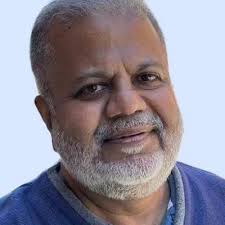
Dilip Ittyera is Founder and CEO of CogniSwitch. His first startup, in 1985, built ERP software used by some of India's largest diamond and jewelry outfits. By the late 1980s he was building symbolic AI based expert systems, and he was working in the field when the AI winter arrived.

In 2001 he ran a root cause analysis on critical customer support tickets and found that fixes delivered within SLA were causing downstream bugs. He used that evidence to persuade management to automate high-impact parts of the software engineering process. He also gave up a CTO role at a large systems integration company to convince its board to create a new business unit built on innovations from the CTO's office. They let him lead it, and his team grew it past 20M in annual revenue.

He led and scaled engineering organizations at NIIT, Hexaware and Zensar, serving Fortune 100 customers. Harvard Business School wrote and teaches a case study on his team at Zensar. He was head of engineering at a Silicon Valley startup that built a code generation product during the dot-com years. His previous startup, Aikon Labs, built Verve, an innovation management product used by Flipkart, NASSCOM and Zensar.

His through-line across all of it is knowledge management: how organizations capture and structure what they know so it can be used. That is what brought him back to AI when BERT arrived. Language models had crossed the fluency threshold without the structure the old symbolic systems were built on, and in a regulated setting that produces output which reads as authoritative and is hard to defend to an auditor. CogniSwitch pairs the two. A language model generates, and a deterministic layer of rules and a knowledge graph checks the result against the enterprise's own knowledge.

Joshua Thomas

Joshua Thomas

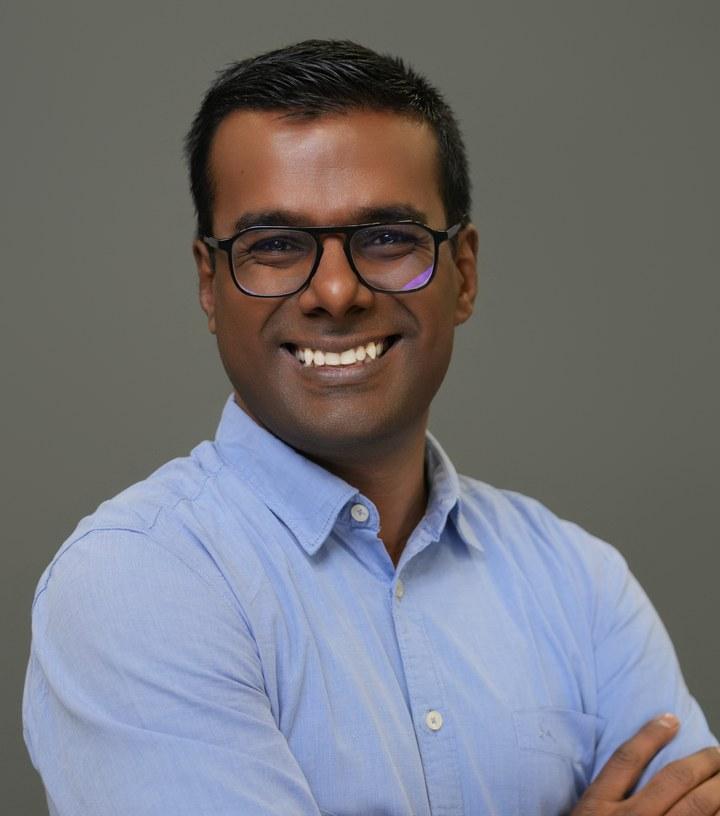
Joshua Thomas is Co-Founder and CTO of CogniSwitch, where he leads the verification architecture. As a student he rediscovered ring theory by abstracting group theory, working it out before he opened the college books that would have taught it to him.

At Aikon Labs, one of IBM Watson's first partners in India, he built the AI stack from scratch: classifiers, recommendation engines, topic analysis, conversational bots, a search engine, and the MLOps underneath it, including automated model registry and serving. He built multiple machine learning, deep learning and attention models along with the processing pipelines they needed. This was pre-transformer work, built without the tooling that arrived later. One of those systems automated email responses to the vendors of a global telecom at better than 99% accuracy.

iEngage, a stakeholder engagement platform he built, carried more than fifty apps built on top of it by a US-listed company, and that work became part of a Harvard case study on digital transformation. Ariv.ai, his Slack and Teams app, answered questions from a team's own conversations and sent each person a daily digest by topic of interest, with the aim of reducing notification fatigue rather than adding to it; it launched #3 on Product Hunt. FreshEngage was the first Freshdesk app with AI, commissioned by the Freshworks CEO, and it automated support agent workflow by finding similar solutions, recommending agents and surfacing insights.

At CogniSwitch he leads the neuro-symbolic architecture that checks agent output against a structured representation of an enterprise's own knowledge, so the answer can be traced to a source. He authored the Context Quality Index, the framework CogniSwitch uses to measure verifiability on top of accuracy.

Vivek Khandelwal

Vivek Khandelwal

Vivek started his first company, Applied Mobile Labs, in 2009 while studying at IIT Bombay. Until 2016, the company served more than 100 million telecom subscribers through mobile education and advertising products.

He carried those lessons into iZooto, building one of the largest push notification platforms for media publishers worldwide. After bootstrapping the business to $5 million in revenue, he exited and joined CogniSwitch.

As Co-founder and Chief Business Officer, Vivek leads CogniSwitch’s go-to-market strategy, drawing on his experience building products used by millions and selling to enterprises globally.

Our work

Our focus is reliability. Trust is critical to AI adoption in regulated industries, and we have started our journey with healthcare.

The core platform is domain agnostic. Each domain is a configured domain pack. In healthcare, our work includes S1, our fine-tuned and calibrated clinical AI decision model, and a deterministic retrieval and inference engine.

BENCHMARK

SOPBench

SOPBench, developed by researchers at the University of California, Santa Barbara and Google DeepMind, evaluates whether language agents follow standard operating procedures.

CogniSwitch’s deterministic verifier matched the benchmark’s code-based grader on the 242 procedure breaches in our reported healthcare-domain comparison.

Read the report

CLINICAL AI MODEL

S1

Our fine-tuned and calibrated clinical AI decision model. Part of CogniSwitch’s work on reliability in healthcare.

Discuss S1

OPEN SOURCE

Knowledge Layer for Agents

KL4A

Enterprise knowledge in a form agents can use. Explore the project and its documentation.

Explore the project

Advised by

Dr. Jacob Eapen

Working in healthcare requires the experience of people who understand the domain.

Dr. Jacob Eapen brings healthcare and public health expertise to CogniSwitch. His perspective adds domain context to the reliability problem as the lab develops its work in healthcare.

If you are working on enterprise agent reliability, we would like to hear about it.